The Baixa
(that means low, bottom) is the
"new" historic center of Lisbon. Although the previous definition of "new center" may
seem contradictory at first sight,
in fact it is not. The first center of the capital was Rossio, but due to the increasing importance of the port city, after
the 1755 earthquake that destroyed the
Lisbon's center, Marquês de Pombal decided that the new Praça do Comércio should be the new capital's center.
But going on slowly...take our time...

The Baixa is precisely the
lower part of the city, starting from
the river Tejo,
it goes inland, passing through Rossio, Restauradores, and
finally continues into the endless Avenida da Liberdade. At the sides of the Baixa, rise two hill's lines, eastern
and western, which, proceeding toward
the inside, delimit it. The Baixa, being one of the best located places, was one of the first inhabited areas of the city. Unluckily, in 1755 came a
great earthquake followed by a
tsunami that literally destroyed
the "bairro". In this
case, the low natural position,
that was favorable to the accessibility and the population of the neighborhood, turned out to be dangerous. Baixa consisted of
a set of short
streets chaotically linked among ancient buildings and referred to the square
Terreiro do Paço. Marquês de Pombal, after
having buried the dead, and stopped the robbers,
decided to rebuild the district starting from the square. This reconstruction
had to be a "grandiose work",
following the most modern architectural
and urban needs,
but at the same time it had to express the symbolic importance of
the absolute power of the
kingdom. In other words, the new
square and the new district had
to represent to the world the beauty and munificence of
the Portuguese nation and its royal
house.

 In order to witness the "new" international
importance of the ancient city
Terreiro do Paço square was renamed Praça do Comércio. The structure,
strictly symmetrical and parallel (geometry = perfection, perfection = power), was designed to promote, through a clever use of perspective, the vision of the whole square. The most important foreign visitors landed
in a small private dock, that is located on the side of the square facing the river, so they could see the Statue
of King Jose I (in the square's center) and the arch above it that overlook
"rua Augusta". Starting
from rua Augusta, the new Baixa show itself as a regular "lattice"
of parallel and perpendicular streets which intersect one with each other. All the buildings have the
same height and often the same
architectural style, the terraces are
long, narrow and they always have the
same size. All of this was made with the intention to protect the city from
others earthquakes, but also for symbolize the new importance of the kingdom.
In order to witness the "new" international
importance of the ancient city
Terreiro do Paço square was renamed Praça do Comércio. The structure,
strictly symmetrical and parallel (geometry = perfection, perfection = power), was designed to promote, through a clever use of perspective, the vision of the whole square. The most important foreign visitors landed
in a small private dock, that is located on the side of the square facing the river, so they could see the Statue
of King Jose I (in the square's center) and the arch above it that overlook
"rua Augusta". Starting
from rua Augusta, the new Baixa show itself as a regular "lattice"
of parallel and perpendicular streets which intersect one with each other. All the buildings have the
same height and often the same
architectural style, the terraces are
long, narrow and they always have the
same size. All of this was made with the intention to protect the city from
others earthquakes, but also for symbolize the new importance of the kingdom.

Today, in the Baixa, there are many touristic places, offices of banks and businesses (even if they
are moving more and more to Marquês de Pombal),
hotels and commercial shops. Nightlife... zero. It
should be noted just the elevador de Santa Justa, the Design and Fashion's museum, and a couple of
cafes, especially good for coffee or rest, but not for go there after dinner.
 The "Basilica
da Estrela", in neo-classical
style, with its twin towers and the
dome, overlooks the large gardens. The interior of the church is decorated with marble (of different colors)
and sculptures made by Machado
de Castro, is
also possible admire the tomb of
Queen Mary I, who commissioned the construction of the
basilica. Inside the church you can see
the impressive Nativity of Machado de Castro that consists
of more than 500 figures.
However, the real masterpiece is undoubtedly the dome,
where you can enjoy a wonderful view of
the city.
The "Basilica
da Estrela", in neo-classical
style, with its twin towers and the
dome, overlooks the large gardens. The interior of the church is decorated with marble (of different colors)
and sculptures made by Machado
de Castro, is
also possible admire the tomb of
Queen Mary I, who commissioned the construction of the
basilica. Inside the church you can see
the impressive Nativity of Machado de Castro that consists
of more than 500 figures.
However, the real masterpiece is undoubtedly the dome,
where you can enjoy a wonderful view of
the city.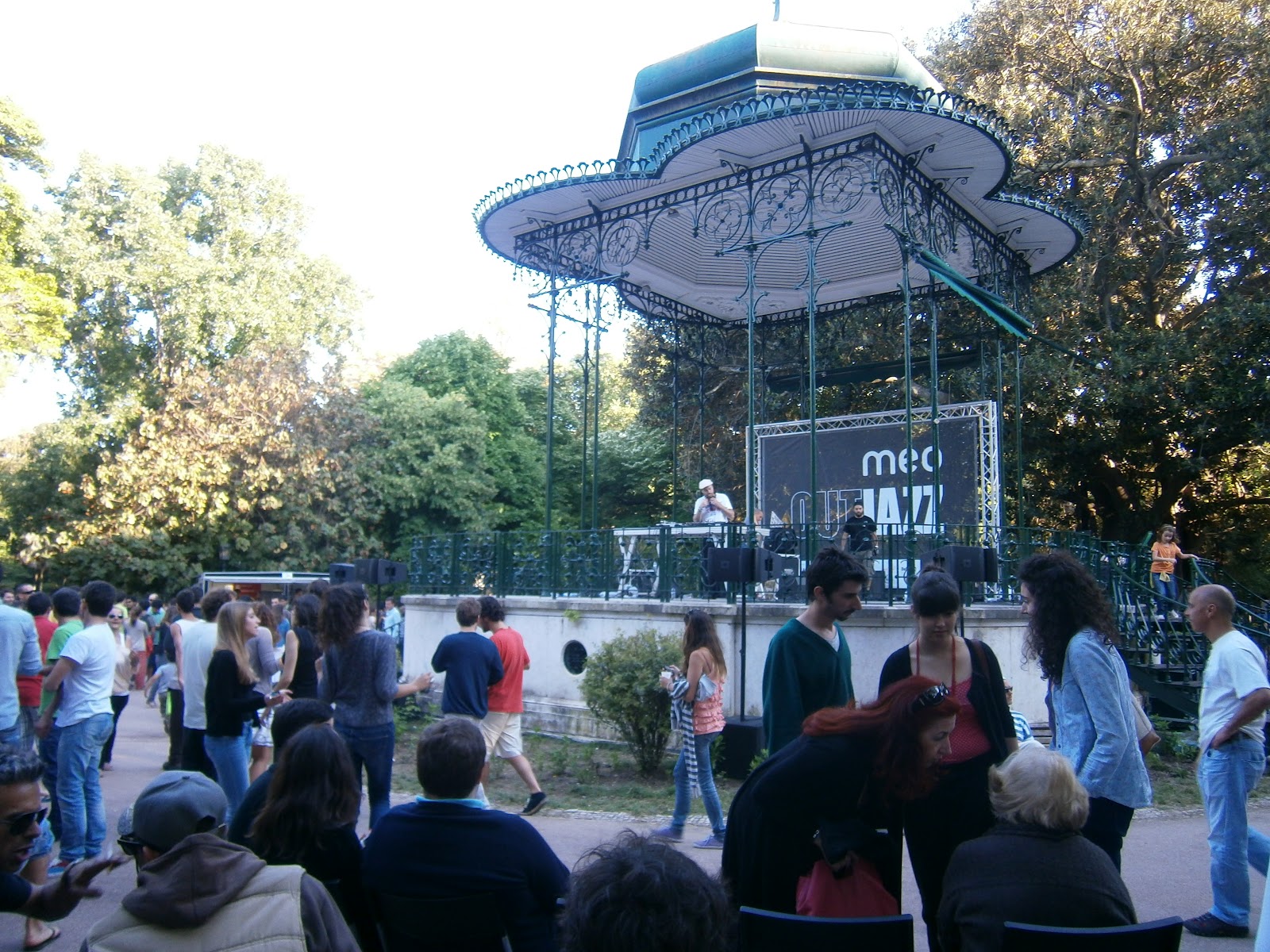 The park Jardim
Guerra Junquerio (better
known as the "Estrela gardens")
is one of the largest gardens of Lisbon,
and inside you can walk among fountains, statues,
a lake and children's play areas. The
gardens are a park "for all", sunday is not at all uncommon meet portuguese families bring their children to
play, elders who come together to
talk, but also many young people who come to Estrela to
rest on the grass, play with
friends or running. At the park there
are also numerous events, especially in the summer, such as "out jazz festivals", concerts, performances by street artists, the days "of the child",
and much more. The two bars in the garden
are great to relax and have a coffee or enjoy a
fantastic "tosta
mista" (toast) one of the best in town.
The park Jardim
Guerra Junquerio (better
known as the "Estrela gardens")
is one of the largest gardens of Lisbon,
and inside you can walk among fountains, statues,
a lake and children's play areas. The
gardens are a park "for all", sunday is not at all uncommon meet portuguese families bring their children to
play, elders who come together to
talk, but also many young people who come to Estrela to
rest on the grass, play with
friends or running. At the park there
are also numerous events, especially in the summer, such as "out jazz festivals", concerts, performances by street artists, the days "of the child",
and much more. The two bars in the garden
are great to relax and have a coffee or enjoy a
fantastic "tosta
mista" (toast) one of the best in town.


